Choosing Lighting for an Open Plan Living and Dining Room
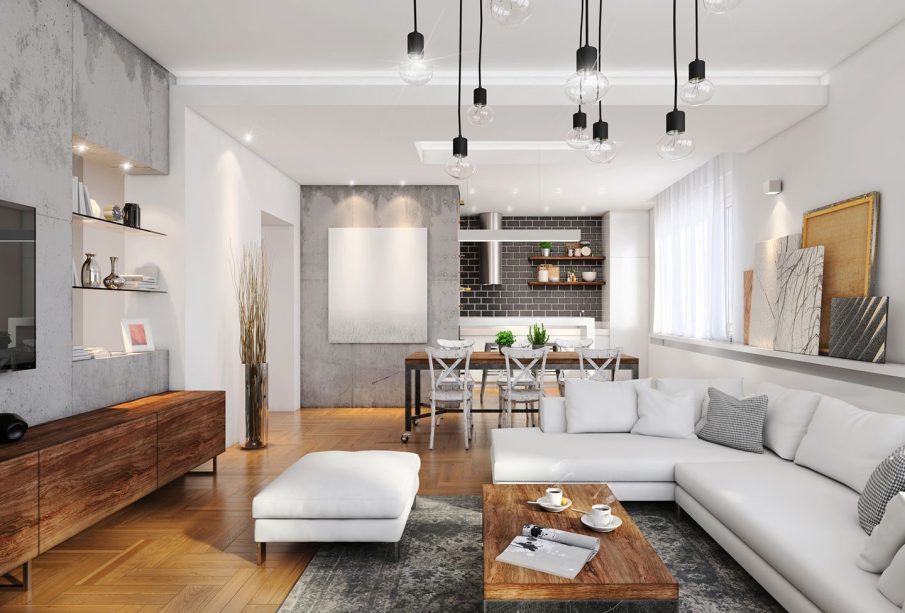
If you’re choosing lights for an open plan living and dining room, I’d start with where you like to sit in the evening. You might want a lamp that shines onto your book and another that lights the dining table without lighting the whole room. From there, you can choose fittings you like that suit the places you’ll use them.
A pendant over the dining table can look good alongside modern lamps near the sofa, even when they’re different shapes. A similar finish or colour can help them work together. You can choose each light for its position, whether it needs to fit on a small side table or hang above a long dining table.
At the dining table
A dining pendant usually looks best centred over the table, rather than in the middle of the room. If the ceiling point is already there, it’s tempting to let that decide the arrangement. But moving or changing the table is a good reason to reconsider where the light belongs, particularly if the new table is a different size. An extending table needs some thought too. The light should reach the people sitting at the ends when you have guests, as well as those in the middle. A fitting that suits the table at its everyday length may leave the ends rather gloomy when it’s extended for guests.
I’d look at the pendant while sitting down before buying. A pendant you love in a photograph can look different from below, particularly if its bulbs are exposed beneath the shade. A shade or concealed light source can help you avoid having a bright bulb in your line of sight while you’re talking across the table.
Around the sofa
Table and floor lamps give you more choice in the seating area. A lamp beside a favourite chair can put light on your book, while another directed towards a wall can make the room feel softer in the evening. You can use one or both depending on what you’re doing, and leave the dining light off when you’re settled on the sofa.
The position matters as much as the lamp itself. What works at one end of the sofa may shine into someone’s eyes from the opposite chair, or reflect in the television. Looking at the light from each seat helps you find a position that suits everyone who uses the room.
Dimmers are useful for changing from a brighter room to something more relaxed after dinner. It’s worth seeing how a light looks at lower settings before choosing it, and confirming that it will work with any controls you already have. Keeping the light colour similar across the room can also help the two areas look good together.
Give the switches and sockets a place in the plan as well. A lamp you can reach from your chair is much nicer to use than one you have to squeeze behind the sofa to adjust. Nearby sockets also let you put lamps where they’re useful without trailing a cable through a doorway.